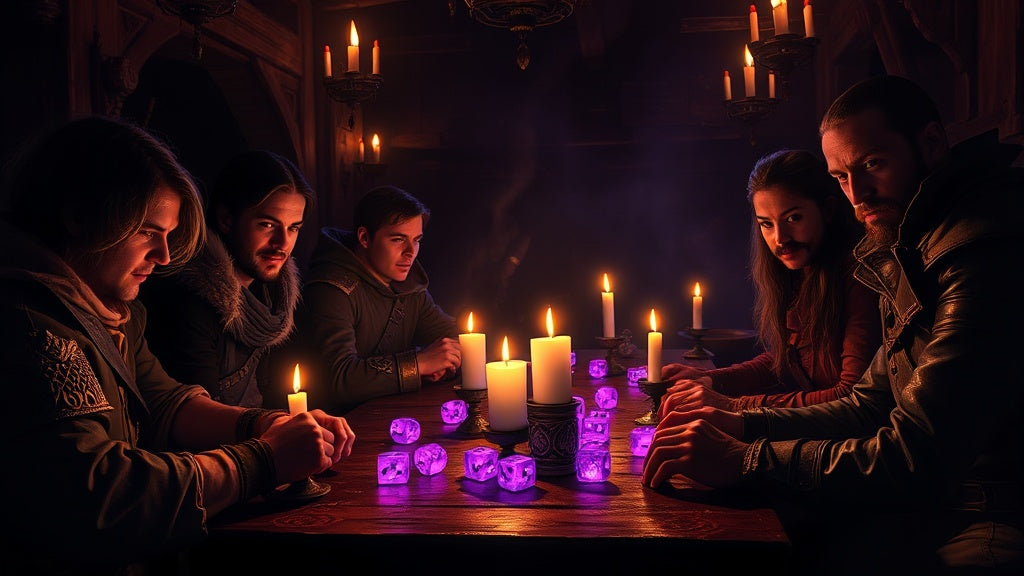
Dungeons & Dragons is the world's most popular tabletop roleplaying game, a collaborative story you and your friends tell together, powered by imagination and the roll of a dice. If you have ever wanted to play but felt overwhelmed by rulebooks and jargon, this guide is for you. We will walk through everything a brand-new player needs to sit down and play your first session with confidence, no prior experience required.
What is Dungeons & Dragons?
At its heart, D&D is a game of collaborative storytelling. One player acts as the Dungeon Master (DM), who describes the world, plays every monster and non-player character, and sets up challenges. Everyone else creates a character, a hero they control, and decides what that hero says and does. When the outcome of an action is uncertain (can you leap the chasm? does your sword find its mark?), you roll dice to find out. There is no board and no winning or losing in the traditional sense, the goal is to have a great adventure together.
What you need to start

The barrier to entry is wonderfully low. To play your first game you need:
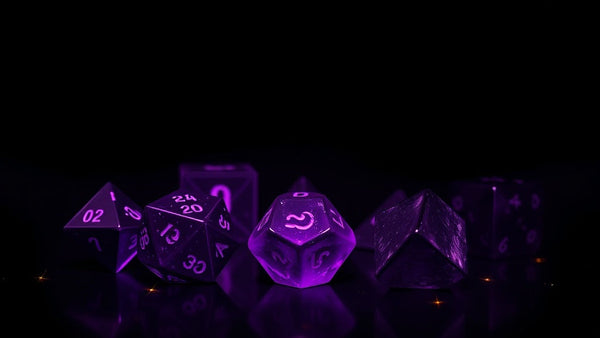
- A set of polyhedral dice, the seven-piece set used in every game. If you are not sure what that means, our guide to what dice you need for D&D breaks it down. One set per player is ideal.
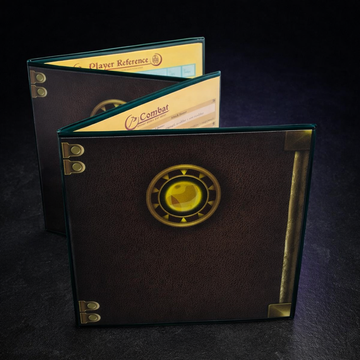
- A character sheet, a single page that records who your hero is. Free blank sheets are easy to find online, and many starter sets include pre-made characters so you can skip ahead.
- The core rules, you can start with the free basic rules, a starter set, or simply lean on your DM, who guides everyone through.
- Pencils, paper and friends. Three to five players plus a DM is the sweet spot, though the game works with fewer.
That is genuinely it. Many groups add miniatures, maps and dice trays later, but none of it is required to start.
The dice and what they do
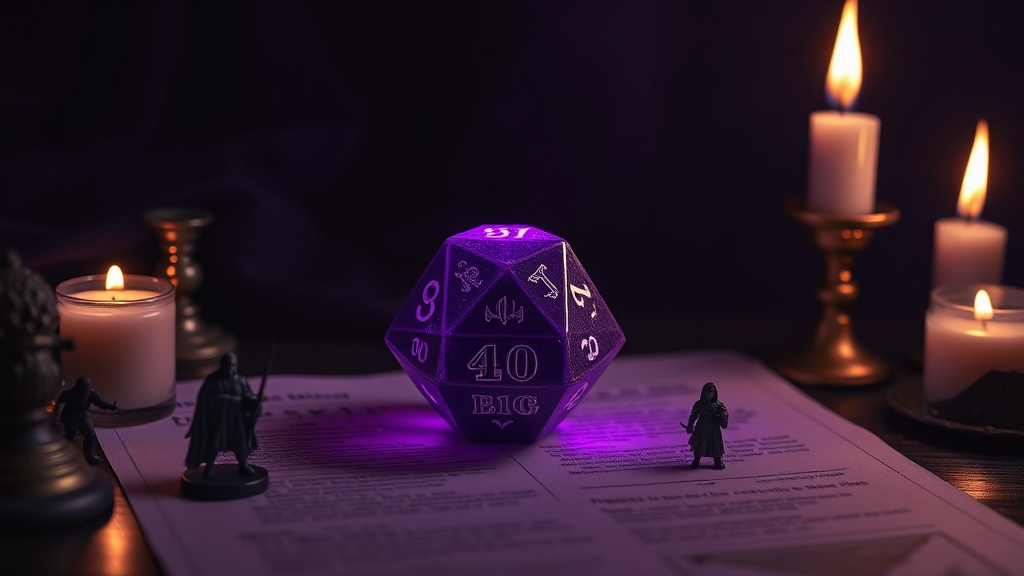
D&D uses a set of seven dice, each with a different number of sides: the d4, d6, d8, d10, d12, d20, and a second d10 for percentages. The undisputed star is the twenty-sided d20, which you roll whenever you attempt something with a chance of failure. The other dice mostly determine how much damage you deal or how much a spell heals. If the notation "2d6 + 3" looks like a foreign language, do not worry, we explain it fully in what dice you need for D&D. For now, just know that the number before the "d" is how many dice to roll, and the number after is which dice.
Creating your first character

Your character is your avatar in the story. Creating one means choosing a few key things: a class (your profession and powers, like a fighter, wizard or rogue), a species (human, elf, dwarf and more), a background (your history), and your ability scores (six numbers that describe how strong, smart and charming you are). If you are agonising over which class to pick, our guide to classes and dice by character is a great primer. New players can also use a pre-generated character from a starter set, a perfectly valid way to learn the ropes before building your own from scratch.
The core mechanic: the d20 roll
If you learn one rule, learn this one, because it powers almost everything. When you try something uncertain, you roll a d20, add the relevant modifier from your character sheet, and compare the total to a target number set by the DM (called the Difficulty Class, or DC). Meet or beat it and you succeed; fall short and you fail. Attacking a monster, sneaking past a guard, persuading a king, leaping a pit, it is all the same simple loop: roll d20, add your bonus, see if you hit the number. A natural 20 (the die shows 20) is a special triumph, and a natural 1 is a dramatic failure.
Advantage and disadvantage

One beginner-friendly twist on the d20 roll is advantage and disadvantage. When circumstances favour you, you roll two d20s and keep the higher result (advantage). When they work against you, you roll two and keep the lower (disadvantage). It is an elegant system that rewards smart play without complex maths, and it is why many players like to keep a spare d20 handy.
A typical turn in combat
Combat in D&D is turn-based and easy to follow once you have seen it. Everyone rolls initiative (a d20 roll) to decide turn order. On your turn you can usually move and take one action, such as attacking, casting a spell or helping an ally. To attack, you roll a d20 to see if you hit, then roll damage dice if you do. Then play passes to the next person. Rounds continue until the fight is resolved. It feels cinematic fast: you describe your hero ducking under an orc's axe and driving a blade home, then the dice tell you how it went.
The three pillars of play
Beyond combat, D&D rests on three "pillars" that make up a session:
- Exploration, travelling the world, searching rooms, solving puzzles and discovering secrets.
- Social interaction, talking to characters, negotiating, deceiving, befriending and roleplaying conversations.
- Combat, the tactical battles described above.
A great campaign weaves all three together. Some players love the dungeon-crawling, others live for the dramatic roleplay, there is room for every style at the table.
The role of the Dungeon Master
The DM is part storyteller, part referee and part fan of the heroes. They prepare or improvise the adventure, describe what your characters see, voice the villains, and adjudicate the rules. Crucially, the DM is not playing against the players, they are creating an exciting story with them. If you are the one volunteering to DM your group, do not be intimidated: start small with a published starter adventure, and remember that everyone is there to have fun, not to memorise rules.
Your first session: what to expect
A first session usually opens with quick introductions of each character, then the DM sets the scene, perhaps a tavern, a road, or the mouth of a cave. From there, you simply react as your character would: ask questions, explore, talk, and when the DM calls for it, roll the dice. Sessions typically run two to four hours. Do not stress about perfection; the rules will click after a roll or two, and the DM is there to guide you. The first time your d20 lands on a natural 20 at a dramatic moment, you will understand why millions of people love this game.
Tips for new players
- Lean into your character. The game is most fun when you make decisions as your hero would, not as a rules calculator.
- Ask questions. Veterans love helping newcomers; nobody expects you to know everything.
- Keep your dice and sheet handy. Knowing where your modifiers are speeds up your turns.
- Say yes to adventure. The best stories come from bold, sometimes reckless, choices.
- Get your own dice. There is a real joy in rolling a set that feels like yours, see our guide to choosing your first set.
How to find a group to play with
The one thing you cannot buy in a box is a group, but finding one is easier than ever. Start with friends: D&D is most fun with people you already enjoy spending time with, and someone in your circle has probably wanted to try it too. If your friends are not interested, look to your local game store, many host beginner-friendly nights, organised play and notice boards for forming parties. Online, dedicated communities and virtual tabletop platforms let you play with people anywhere in the world over video, which is perfect if your schedule or location makes in-person play tricky. Beginner one-shots (single self-contained sessions) are a low-commitment way to test the waters before joining a months-long campaign. Whichever route you take, do not wait for the "perfect" group, the best way to learn is simply to start playing.
Online vs in-person play
Both ways of playing have their charms. In-person games bring the tactile joy of rolling real dice, sharing snacks and reading the room, the classic D&D experience. Online play, through virtual tabletops and video calls, opens the game to friends who have moved away and makes scheduling easier, with digital tools handling maps and even dice rolls for you. Many groups happily mix both. If you play online, we still recommend owning physical dice for the ritual, there is nothing quite like the suspense of a real d20 settling on the table, even if it is just for you.
Frequently asked questions
How many people do you need to play D&D? A DM plus three to five players is ideal, but you can play with as few as one DM and one player.
How long does a game take? A single session is usually two to four hours. Full campaigns can run for months or years of weekly sessions.
Do I need to buy a lot to start? No, a set of dice, a character sheet and the free basic rules are enough. A starter set is a convenient all-in-one option.
Is D&D hard to learn? Not at all. The core is a single d20 roll, and your DM guides you. Most people are playing comfortably within their first session.
Ready to roll your first character? Grab a beginner dice set, gather your friends, and step into the adventure. Gear up. Roll to win.