What Is a Nat 20 in D&D? The Complete Guide to Natural 20s and Nat 1s
If you have spent any time at a Dungeons & Dragons table, you have heard the roar. Someone slams the table, the whole group cheers, and one player holds up a single die with the number 20 staring back at everyone. That, right there, is the magic of the natural 20. It is one of the most beloved moments in tabletop gaming, and it has become shorthand for luck, glory, and pure cinematic chaos.
But what exactly is a nat 20? Why do players treat it like winning the lottery? And what about its cursed twin, the nat 1? In this guide we break down everything you need to know about natural 20s and natural 1s, what they actually do by the rules, the popular myths that persist at nearly every table, and the house rules that make these rolls even more fun. Whether you are a brand new player or a seasoned dungeon master, this is your one stop breakdown.
What Is a Natural 20?

A natural 20, often shortened to nat 20, means you rolled a 20 on the twenty sided die itself, before adding any modifiers, bonuses, or penalties. The word natural is the key. It refers to the raw number showing on the physical die, not the final total after math.
Here is the distinction that trips up new players. Imagine you have a +7 bonus to hit and you roll a 13 on your d20. Your total is 20. That is a fine result, but it is not a natural 20. A natural 20 is when the d20 physically lands on the number 20 with no modifiers involved. If you want a refresher on the die itself, take a look at what is a d20 for the full breakdown of gaming's most iconic polyhedron.
You can try it yourself right now. Use our roll a d20 tool and see how often that beautiful 20 comes up. Statistically, on a fair d20, you have a 1 in 20 chance, or 5 percent, of rolling a natural 20 on any given roll. That rarity is exactly what makes it feel so special.
Why the Natural 20 Matters So Much
The natural 20 carries special weight in the rules of D&D fifth edition, but only in specific situations. It is not a universal win button, despite what many tables believe. Understanding when a nat 20 actually triggers something mechanical, versus when it is just a high number, is the difference between playing by the rules as written and playing by table tradition.
Natural 20 on an Attack Roll: The Critical Hit
The single most important thing a natural 20 does in the official rules is trigger a critical hit on an attack roll. This is where the nat 20 earns its reputation.
When you roll a natural 20 on an attack roll, two things happen automatically:
- Automatic hit. A natural 20 on an attack roll always hits, no matter how high the target's Armor Class is. Even if the enemy has an AC of 30 and your total roll could never reach it, the natural 20 connects. Your sword finds the gap in the armor.
- Critical hit damage. When you land a critical hit, you roll all of the attack's damage dice twice and add them together, then add your usual modifiers once. This is often called doubling the damage dice.
How Critical Hit Damage Actually Works
Let's walk through a clean example so there is no confusion. Say your longsword deals 1d8 + 3 slashing damage on a normal hit. On a critical hit from a natural 20, you do not double the total. Instead you roll the damage dice twice.
| Roll type | Damage dice | Modifier | Example total |
|---|---|---|---|
| Normal hit | 1d8 (roll once) | +3 | 6 + 3 = 9 |
| Critical hit (nat 20) | 2d8 (roll twice) | +3 | 6 + 5 + 3 = 14 |
Notice that you add the +3 modifier only once, not twice. The dice double, but flat bonuses stay the same. This trips up a lot of new players, so it is worth committing to memory. Any extra dice from features like Sneak Attack or a Divine Smite also double on a critical hit, which is why some builds absolutely explode when they roll that beautiful 20.
The Great Myth: Nat 20 on Skill Checks and Saving Throws

Here is where we bust one of the most common misconceptions in all of D&D. At countless tables, players believe that a natural 20 on any roll means automatic success. Roll a 20 on a Persuasion check? You convince the king. Roll a 20 on an Athletics check? You leap the impossible chasm. This feels intuitive, but by the rules as written, it is simply not true.
The rules as written are clear on this point. The natural 20 automatic success rule applies only to attack rolls. It does not apply to ability checks or skill checks. When you roll a Charisma based Persuasion check or a Strength based Athletics check, a natural 20 is just a 20 that you add your modifiers to. If your total does not meet the Difficulty Class the dungeon master set, you fail, even with that shiny 20 on the die.
The same is true for saving throws. Officially, there is no critical success or critical failure on ability checks or on most saving throws. A natural 20 on a Dexterity saving throw to dodge a fireball is not an automatic pass. You still add your modifier and compare it to the save DC. If you want to understand how those modifiers come from your character sheet, our guide to ability scores explains exactly where those bonuses come from.
Why So Many Tables Use It as a House Rule Anyway
Despite what the rules say, the nat 20 auto success on skill checks is one of the most popular house rules in the game. And honestly, it is easy to see why. It feels good. It rewards a rare roll with a memorable moment. Many dungeon masters embrace it because it produces the kind of over the top heroic scenes that make a session unforgettable.
Some dungeon masters use a middle ground approach. A natural 20 on a skill check might not guarantee success against an impossible task, but it earns the best possible outcome within reason, or it turns a partial success into a full one. However you slice it, the important thing to know is that this is a house rule, not the official rule. Ask your dungeon master how they handle it before you assume that 20 saves you.
What Is a Nat 1? The Critical Miss
Every hero needs a nemesis, and for the natural 20, that nemesis is the natural 1. A nat 1 is rolling a 1 on the d20 before any modifiers, and it is the polar opposite of glory. When the table groans in unison, someone just rolled a natural 1.
By the official rules, a natural 1 on an attack roll is an automatic miss. It does not matter how large your attack bonus is or how low the target's Armor Class is. If you roll a natural 1 on the attack, you miss. Your blade swings wide, your arrow sails into a tree, your spell fizzles. The universe has decided.
Just like the natural 20, the nat 1 automatic failure rule officially applies only to attack rolls. There is no rules as written critical failure on ability checks or saving throws. A natural 1 on a Persuasion check is just a low roll, not a mandatory disaster where you insult the king. But again, plenty of tables house rule this differently.
Natural 20 and Natural 1 on Death Saving Throws

Death saving throws are one place where natural 20s and natural 1s have dramatic, official rules effects that go beyond normal saves. When your character drops to 0 hit points and starts making death saves, the natural rolls matter enormously.
- Natural 20 on a death save: You do not just succeed. You immediately regain 1 hit point and get back on your feet. Your character springs back to consciousness, back in the fight. It is one of the most cinematic moments the rules officially support.
- Natural 1 on a death save: This counts as two failed death saves at once, rather than one. Since three failures means death, a single natural 1 puts you two thirds of the way to the grave in one terrifying roll.
These death save rules are official and are some of the highest stakes moments in the game. A natural 20 here can turn certain death into a triumphant comeback, while a natural 1 can end a beloved character in an instant.
Popular House Rules and Critical Hit Tables
Because critical hits and misses are so exciting, dungeon masters love to expand on them with house rules. These optional rules add flavor, risk, and unpredictability. Here are some of the most popular variants you will encounter.
Maximized Critical Damage
Some tables replace rolling the doubled damage dice with a simpler, punchier rule. Instead of rolling twice, you take the maximum value of your normal damage dice and then roll one set on top. So that 1d8 longsword becomes 8 plus 1d8 on a crit. This guarantees critical hits feel powerful and speeds up the math.
Critical Hit and Fumble Tables
Critical hit tables and fumble tables are wildly popular. When you roll a nat 20, you roll on a special table for a bonus effect like knocking the enemy prone, causing a bleeding wound, or dealing extra damage to a specific limb. When you roll a nat 1, a fumble table might have you drop your weapon, hit an ally, or stumble to the ground.
Fumble tables are the most debated house rule in D&D. Critics point out that martial characters make far more attack rolls than spellcasters, so they suffer far more fumbles, which unfairly punishes fighters and rogues. Fans love the chaos and comedy. If you use a fumble table, consider applying it only to specific dramatic moments rather than every single natural 1.
Exploding Crits and Expanded Crit Ranges
Other popular variants include letting certain classes or magic weapons score critical hits on a natural 19 or even 18, expanding the crit range. The Champion fighter subclass does exactly this in the official rules. A few tables also use exploding dice, where a maximum damage die roll lets you roll again and add more.
| House rule | What it does | Best for |
|---|---|---|
| Nat 20 auto success on skills | Any natural 20 succeeds or gives the best outcome | Cinematic, heroic tables |
| Max plus roll crits | Max damage dice plus one rolled set | Faster, punchier combat |
| Crit and fumble tables | Special effects on nat 20 and nat 1 | Chaos loving groups |
| Expanded crit range | Crits on 19 or 18, not just 20 | High action, swingy combat |
The Fun Factor: Why Nat 20s Create Legendary Table Moments
Beyond the mechanics, the natural 20 is really about the shared experience at the table. There is nothing quite like the collective gasp when a player, down to their last hit point, needs a specific result and the die lands on 20. Or the disbelieving laughter when a character critically fails a simple task at the worst possible moment.
These rolls generate the stories players retell for years. The barbarian who critted the dragon. The wizard who rolled a nat 1 and set the tavern on fire. The cleric who rolled a natural 20 on a death save and rose from certain death to save the party. The dice do not know the story, but they write it anyway, and that unpredictability is the heartbeat of Dungeons & Dragons.
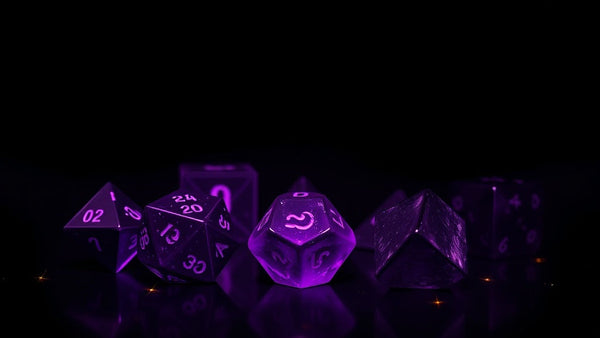
Part of the ritual is having dice you love to roll. Many players keep a lucky d20 or a special set reserved for big moments. If you are looking to add some flair to your collection, our dice sets are built for exactly these table defining rolls, with the kind of heft and balance that makes every natural 20 feel earned.
Frequently Asked Questions About Nat 20s and Nat 1s
What is a nat 20 in D&D?
A nat 20, or natural 20, is when you roll a 20 on the d20 itself before adding any modifiers. On an attack roll it means an automatic hit and a critical hit, where you roll your damage dice twice.
Does a nat 20 always succeed?
Not by the official rules. A natural 20 is an automatic hit and critical hit only on attack rolls. On skill checks, ability checks, and saving throws, a natural 20 is just a 20 plus your modifiers. Many tables use a house rule that makes a nat 20 succeed on anything, but that is not the rule as written.
What does rolling a nat 1 mean?
A natural 1 is rolling a 1 on the d20 before modifiers. On an attack roll it is an automatic miss regardless of the target's Armor Class. On other rolls it has no special effect by the official rules, though many tables treat it as a critical failure via house rules.
How much damage does a critical hit deal?
On a critical hit you roll all of the attack's damage dice twice and add your modifier once. A longsword that normally deals 1d8 + 3 deals 2d8 + 3 on a crit. Bonus dice from features like Sneak Attack also double.
What happens on a nat 20 or nat 1 during a death save?
A natural 20 on a death saving throw means you regain 1 hit point and immediately return to consciousness. A natural 1 on a death saving throw counts as two failures at once, bringing you dangerously close to death.
Do critical hits work on spells?
Yes, if the spell requires an attack roll. Spells like Fire Bolt or Guiding Bolt can critically hit when you roll a natural 20 on the attack, doubling the spell's damage dice. Spells that call for a saving throw instead of an attack roll cannot critically hit, since there is no attack roll to score a 20 on.
Final Thoughts
The natural 20 and the natural 1 are more than numbers on a die. They are the moments of pure luck that turn a good session into a legendary one. Know the rules as written so you understand what your rolls actually do, talk with your dungeon master about which house rules your table uses, and above all, savor the drama. Every time you pick up that d20, you are one roll away from a story worth telling. Now go roll some 20s.