Creating a character is one of the most exciting parts of Dungeons & Dragons, it is where your hero comes to life. But for a first-timer, a blank character sheet can feel intimidating. This step-by-step guide takes you from blank page to ready-to-play adventurer, explaining each choice in plain language so you can build a character you will love to roll dice for. We will cover every part of the sheet in order, with a worked example and the common mistakes to avoid, so that by the end you will have a hero who is mechanically sound and genuinely fun to play.
Before you start
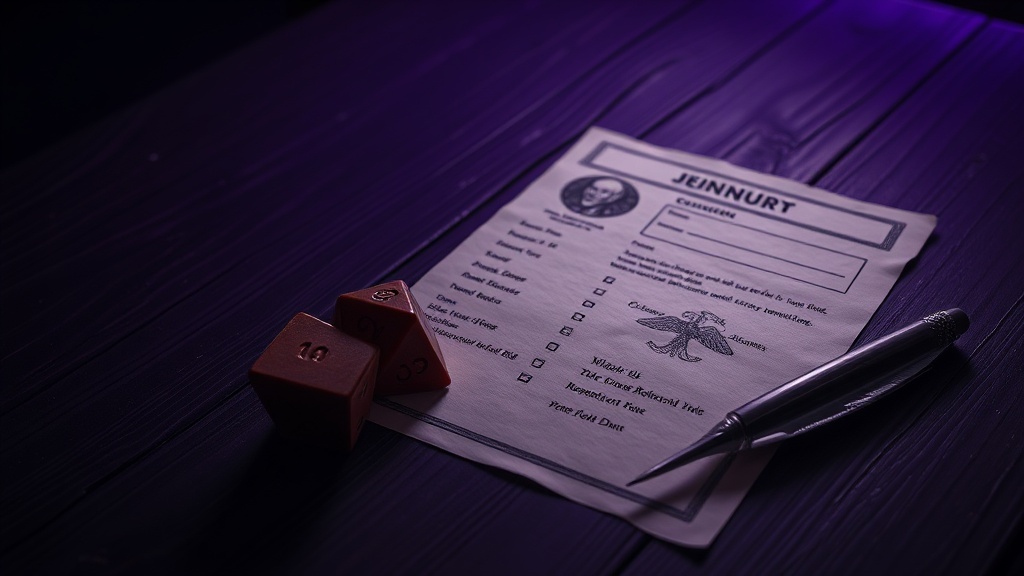
Grab a character sheet (a free blank one or the one in a starter set), a pencil, and your set of dice. If this is your very first game, ask your DM what rules you are using and whether there are any limits on options. Do not aim for the "optimal" build, aim for a character concept that excites you. A hero you find fun to play will always beat a mathematically perfect one you find boring.
Step 1: Imagine your character

Before the numbers, picture the person. Are they a brave knight, a sneaky thief, a wise healer, a chaotic wizard? Even a one-sentence concept ("a gruff dwarf cleric who left her mountain home to repay a debt") will guide every choice that follows and make the mechanics fall into place naturally.
Step 2: Choose a class
Your class is the single biggest decision, it defines what your character can do, from swinging weapons to casting spells. Popular starting classes include the Fighter (tough and simple, great for beginners), the Rogue (stealthy and skillful), the Wizard (fragile but powerful spellcaster) and the Cleric (healer and holy warrior). If you are torn, our class and dice guide gives a feel for each one. Beginners often enjoy the Fighter or Rogue because they are powerful without a long spell list to manage.
Step 3: Choose a species

Your species (sometimes called race) is the people your character belongs to, human, elf, dwarf, halfling, and many more. Each grants small bonuses and traits, like darkvision for elves or resilience for dwarves. Choose one that fits your concept and that you find evocative; the mechanical differences are modest for a first character, so follow the flavour you like best.
Step 4: Determine ability scores
Six ability scores describe your character's raw capabilities: Strength, Dexterity, Constitution, Intelligence, Wisdom and Charisma. There are a few ways to generate them, rolling dice (commonly 4d6, dropping the lowest, six times), using a "standard array" of fixed numbers, or a point-buy system. Your DM will tell you which. Put your highest scores in the abilities your class cares about most (Strength or Dexterity for fighters, Intelligence for wizards, Wisdom for clerics, and so on). Each score gives a modifier, the bonus you add to your d20 rolls.
Step 5: Pick a background

Your background represents life before adventuring, soldier, criminal, sage, acolyte and more. It grants a couple of skill proficiencies, some starting gear, and a hook for roleplay. Backgrounds are a brilliant, low-stakes way to add personality and tie your hero into the world. Pick one that matches your one-sentence concept.
Step 6: Note your skills and proficiencies
Your class and background give you proficiencies, things you are especially good at, from specific skills (Stealth, Persuasion, Perception) to weapons and saving throws. When you are proficient in a skill, you add your proficiency bonus to those d20 rolls. Mark these on your sheet so you know which checks you are great at; they shape how your character solves problems.
Step 7: Choose equipment
Most classes offer a starting equipment package, weapons, armour and a few adventuring tools. Take the package unless you have a specific reason not to; it is balanced for a new character. Note your Armour Class (how hard you are to hit) and your weapons' damage dice, you will use them constantly in combat.
Step 8: Spells (if you cast them)
If you chose a spellcasting class like a wizard, cleric or sorcerer, you will select a handful of spells and cantrips (small spells you can cast at will). Start with a mix: one or two reliable damage options, something useful out of combat, and a healing or utility spell if available. You can swap and learn more as you level up, so do not overthink your first picks.
Step 9: Add personality and details
Finally, breathe life into your hero: a name, a few personality traits, an ideal they believe in, a bond they care about, and a flaw that makes them human. These details turn a sheet of numbers into a character you will enjoy roleplaying. They also give your DM hooks to weave you into the story.
Step 10: Level up over time
Characters grow as you play. When your DM awards a level, you gain more hit points, often new abilities or spells, and eventually boosts to your ability scores. Levelling is one of the great joys of a campaign, your fragile level-one adventurer can become a legendary hero over time. Keep your sheet updated as you go.
Choosing a name and backstory
The finishing touch on any character is a name and a short backstory, and they matter more than new players expect. A good name sets the tone instantly: a gruff dwarf called Thorvald lands differently from an elegant elf called Sylwen. Do not agonise, say a few options aloud and pick the one that feels right in your mouth, since you will be hearing it all campaign. For backstory, three or four sentences is plenty to begin: where your character is from, one formative event, what they want, and one thing they fear or regret. Resist the urge to write a novel, your story should leave room to grow at the table, where the best moments are improvised. Crucially, give your DM a hook or two: an enemy, a lost sibling, an unpaid debt, threads they can weave into the adventure to make you feel part of the world. A character with even a light backstory is far more fun to play than a blank slate, and it gives every dice roll a little more meaning.
A quick example: building Kara the rogue
Let us put the steps together with a quick example. We start with a concept: Kara, a sharp-tongued city thief looking for a fresh start. That points us to the Rogue class for her stealth and skills. We pick human as her species for flexibility, and the Criminal background to match her past, which grants Stealth and Deception proficiencies. For ability scores we put her highest number into Dexterity (rogues live and die by it), then Constitution and Charisma. Her starting equipment package gives her a rapier, a shortbow, leather armour and thieves' tools. We note her Armour Class, her sneak attack damage dice, and her skill proficiencies. Finally we add personality: confident, secretly loyal, with a flaw for shiny valuables. In under an hour, Kara has gone from a one-line idea to a fully playable hero, ready to roll.
Common character creation mistakes
- Chasing the "optimal" build. A character you enjoy roleplaying beats a min-maxed one you find dull. Fun first.
- Spreading ability scores too thin. Prioritise the one or two abilities your class relies on rather than being mediocre at everything.
- Ignoring the social and exploration pillars. Not every problem is solved by combat, a few skills and a good background make you useful everywhere.
- Overthinking your first spells. You can swap and learn more as you level, so pick a sensible mix and adjust later.
- Skipping personality. The traits, ideals, bonds and flaws are what make the game come alive, do not leave them blank.
Frequently asked questions
What is the easiest class for beginners? The Fighter and the Rogue are popular first picks, powerful and straightforward, with no long spell list to track.
How are ability scores decided? By rolling dice (4d6 drop lowest), a standard array, or point buy. Your DM chooses the method for your table.
Can I use a pre-made character? Absolutely. Pre-generated characters from starter sets are a great way to learn before building your own.
How long does character creation take? Around 30 to 60 minutes for a first character, faster once you know the steps.
Do I need to know all the rules to make a character? No. Your DM and the rest of the table will help, and a starter set or pre-made character lets you skip ahead and learn as you play.
What should I pick first, class or concept? Start with a one-sentence concept for your hero, then let it guide your class, species and background. The numbers fall into place around a clear idea.
With your hero ready, all that is left is to roll. Pick up a dice set that matches your character and bring them to life at the table. Gear up. Roll to win.