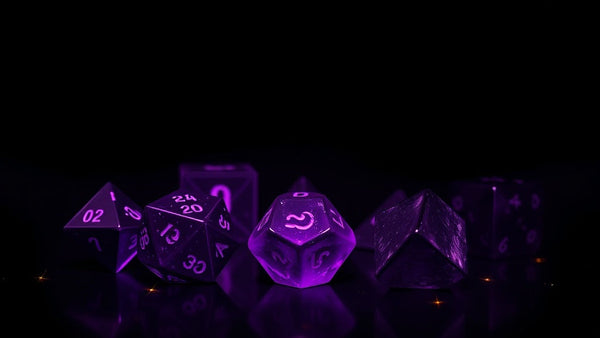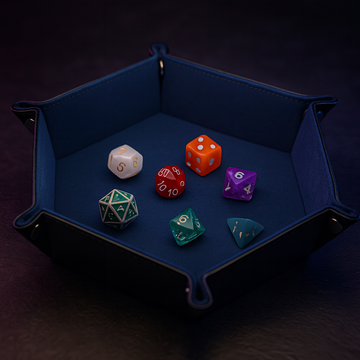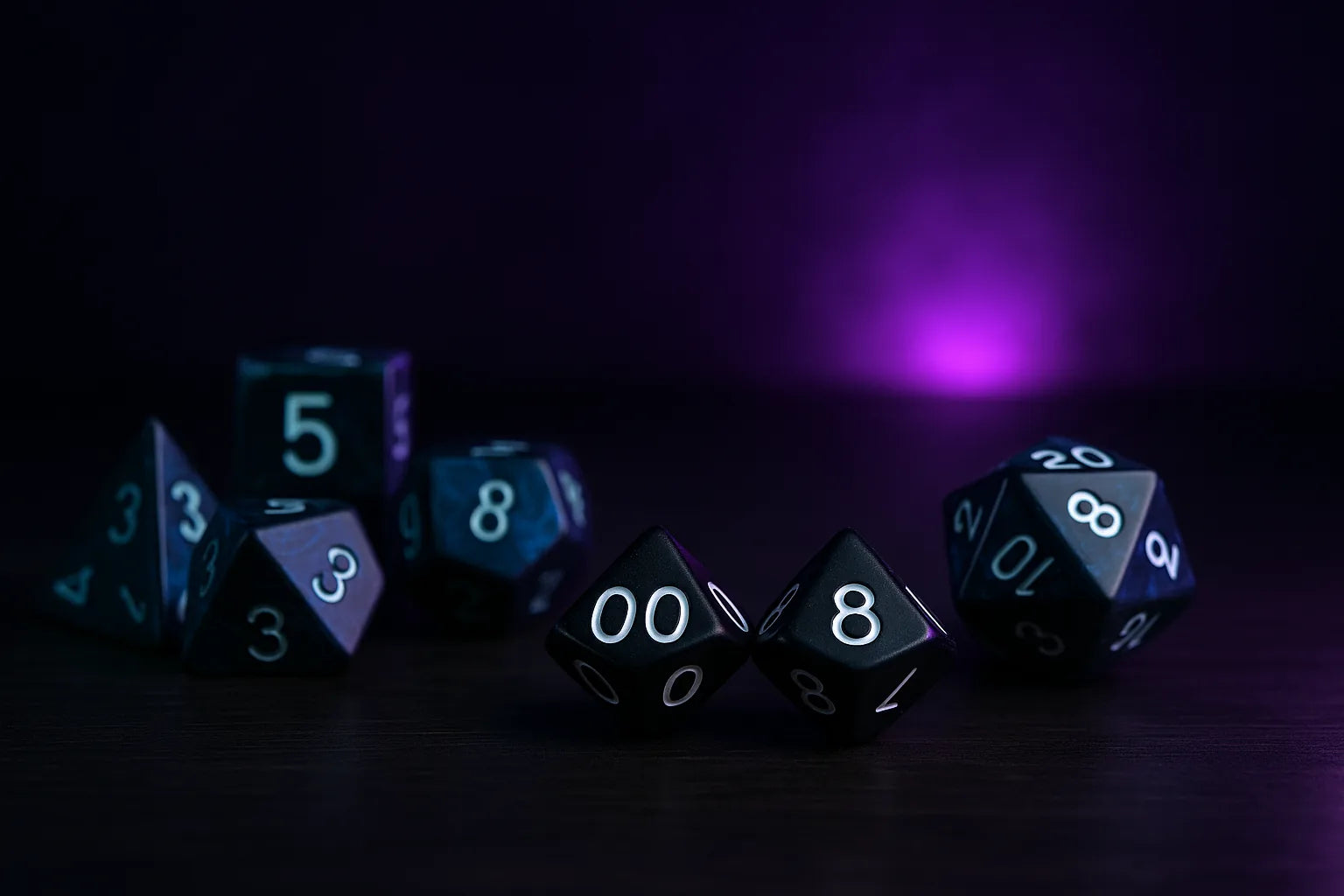
If you have ever cracked open a boxed dice set and found two ten sided dice that looked almost identical, you have already met the humble d100. The term d100 dice refers to any method of generating a random number between 1 and 100, and it sits at the heart of countless tabletop moments, from dramatic percentile checks to chaotic wild magic surges. Whether you are a brand new player or a veteran game master, understanding how d100 dice work will make your table run smoother and your random results feel a whole lot more exciting. In this complete guide we will break down exactly what a d100 is, how to read the numbers, and when to reach for one.
What Exactly Is a D100?
A d100 is a die, or a pair of dice, used to roll a number from 1 to 100. Unlike a standard d20 or d6, most gamers do not own a single solid sphere with one hundred physical faces. Instead, the far more common approach is to use two ten sided dice together. One die represents the tens place and the other represents the ones place. Roll them at the same time, read them in order, and you get a value spread evenly across the full one to one hundred range.
This two dice method is why d100 dice are sometimes called percentile dice. Because there are exactly one hundred possible outcomes, every single result maps neatly to a percentage. Rolling a 37 is the same as saying you landed on 37 percent. That clean mapping makes the d100 the perfect tool anytime a game asks you to check something against a percentage chance.
Two D10s Versus a True Hundred Sided Ball

There are actually two physical objects that both claim the d100 name, and it is worth knowing the difference.
- The percentile pair. This is the standard setup: two ten sided dice. One is usually marked with single digits (0 through 9) and the other is marked with tens (00, 10, 20, all the way up to 90). You read them together to form a two digit number. This is what most rulebooks assume you are using.
- The true hundred sided sphere. Often nicknamed the Zocchihedron after its inventor, this is a large rounded die covered in one hundred tiny numbered faces. It rolls like a golf ball and takes a moment to settle. It is a fun novelty and a great collector piece, but it is bulkier, slower to read, and can wobble for ages before stopping.
For actual play, the pair of ten sided dice wins almost every time. It is faster to read, easier to store, and it doubles as two separate d10s when you need them. The giant sphere is a wonderful conversation starter, but the percentile pair is the workhorse that most players rely on session after session.
How to Read D100 Dice: The 00 and 0 Trick
Reading a percentile roll trips up a lot of new players, so let us walk through it slowly. You take your tens die (the one showing 00, 10, 20, and so on) and your ones die (the one showing 0 through 9). You add them together.
- Roll both dice.
- Read the tens die first. If it shows 40, that is forty.
- Read the ones die next. If it shows 3, that is three.
- Combine them: 40 plus 3 equals 43.
The confusing part is the double zero. When your tens die shows 00 and your ones die shows a number from 1 to 9, you simply read the ones value. So 00 and 7 equals 7. But when both dice show zero at the same time, the result is not zero. That combination reads as 100, the maximum value on the range. This is the single most important rule to memorize: 00 plus 0 equals 100, not nothing. Once that clicks, every other percentile roll becomes second nature.
A quick tip for tables that only own regular numbered d10s without a dedicated tens die: just decide before you roll which die is the tens digit and which is the ones digit. Many players color code them or physically place the tens die on the left so there is never any confusion mid roll.
When to Use D100 Dice at the Table

The d100 shines whenever a game wants fine grained randomness or a percentage based chance. Here are the most common situations where these dice earn their keep.
Random tables. Game masters live and breathe random tables. Loot drops, wandering monster charts, weather generators, tavern rumors, and treasure hoards are frequently built as d100 tables. A hundred entry table gives designers enough room to include both common results and rare surprises, and rolling percentile dice is the fastest way to pick a row.
Percentile checks. Many game systems, especially older editions and horror focused games, resolve skills as a roll under a target percentage. If your skill rating is 65, you need to roll 65 or lower on your d100 dice to succeed. This roll under design gives characters a clear, intuitive success chance that anyone at the table can understand instantly.
Wild magic and chaos effects. Some of the most memorable moments in a campaign come from a wild magic surge table. When a spell goes sideways, a game master often calls for a d100 roll to see what unpredictable effect erupts. You might turn blue, summon a flock of flamingos, or accidentally teleport across the room. The wide range of a hundred outcomes is exactly what makes these tables feel dangerous and delightful.
D100 Versus a Single D10 Percentile
A common question is why anyone bothers with a full hundred sided range when a single d10 already covers 1 through 10. The answer is granularity. A single d10 only gives you ten possible outcomes, or ten percent steps. That is fine for a quick coin flip style choice, but it is far too coarse when a game wants to distinguish a 3 percent chance from a 7 percent chance.
The d100 lets designers assign precise probabilities. A rare magic item might live at result 98 to 100, a mere three percent chance, while common junk fills results 1 through 40. You simply cannot express that kind of nuance with a single d10. Think of the single d10 as a rough sketch and the d100 as the detailed painting. Both have their place, but when precision matters, the percentile pair is the only tool that delivers.
It is also worth noting that every percentile pair contains two perfectly usable d10s. If your game never calls for a full percentile roll during a session, those same dice still handle damage rolls, initiative variants, and any other ten sided task you throw at them. That flexibility is part of why a good set of d100 dice is such a smart addition to any collection.
Buying D100 Dice: What to Look For

Not all percentile dice are created equal, and a few small details make a big difference in daily use.
- Matched pairs. Look for a tens die and a ones die that clearly differ. The best sets mark the tens die with the double digit numbers (00, 10, 20) so there is zero ambiguity about which die is which during a roll.
- Readable numbers. High contrast paint or inked numbers matter more than you think. Trying to read a faint number across a dim table slows the whole game down. Bold, legible digits keep play moving.
- Balanced and consistent. Quality dice are evenly weighted so results stay fair. Cheaper novelty dice can favor certain faces, which quietly skews your random tables over a long campaign.
- Material and feel. Acrylic dice are affordable, colorful, and durable, making them ideal for regular play. Metal dice feel premium and roll with a satisfying weight, though they cost more and can be loud on hard surfaces.
If you are just starting out, a simple matched acrylic pair with a proper tens die is all you need. As your collection grows, you can add sharper edged precision dice or a showpiece hundred sided sphere for the sheer fun of it.
Pro Tips for Rolling Percentile Dice
A few habits will make your d100 rolls cleaner and faster at the table. First, always establish your tens die before you roll so you never argue about which number came first. Second, roll both dice inside a dice tray or on a flat surface so the giant sphere style dice, if you use one, do not roll off into the abyss under the couch. Third, memorize the 00 plus 0 equals 100 rule and teach it to new players early so nobody accidentally records a roll of zero.
Game masters can also lean into the drama. Let the dice settle in full view of the table before you read the result of a wild magic surge or a rare loot roll. That moment of suspense as everyone waits to see if the ones die lands on the number that unlocks a legendary item is exactly the kind of tension that makes tabletop gaming unforgettable.
Final Thoughts on D100 Dice
The d100 may look like nothing more than two ordinary ten sided dice, but it unlocks a huge amount of gameplay depth. From percentile skill checks to sprawling random tables to the glorious chaos of wild magic, these dice let your game express probabilities with real precision. Learning to read them takes only a minute, and once the 00 plus 0 equals 100 rule sticks, you will roll percentile results with total confidence. Whether you choose a practical matched pair or a flashy hundred sided sphere, a solid set of d100 dice belongs in every serious player's collection. Grab a pair, memorize the rules, and let the percentages decide your fate.