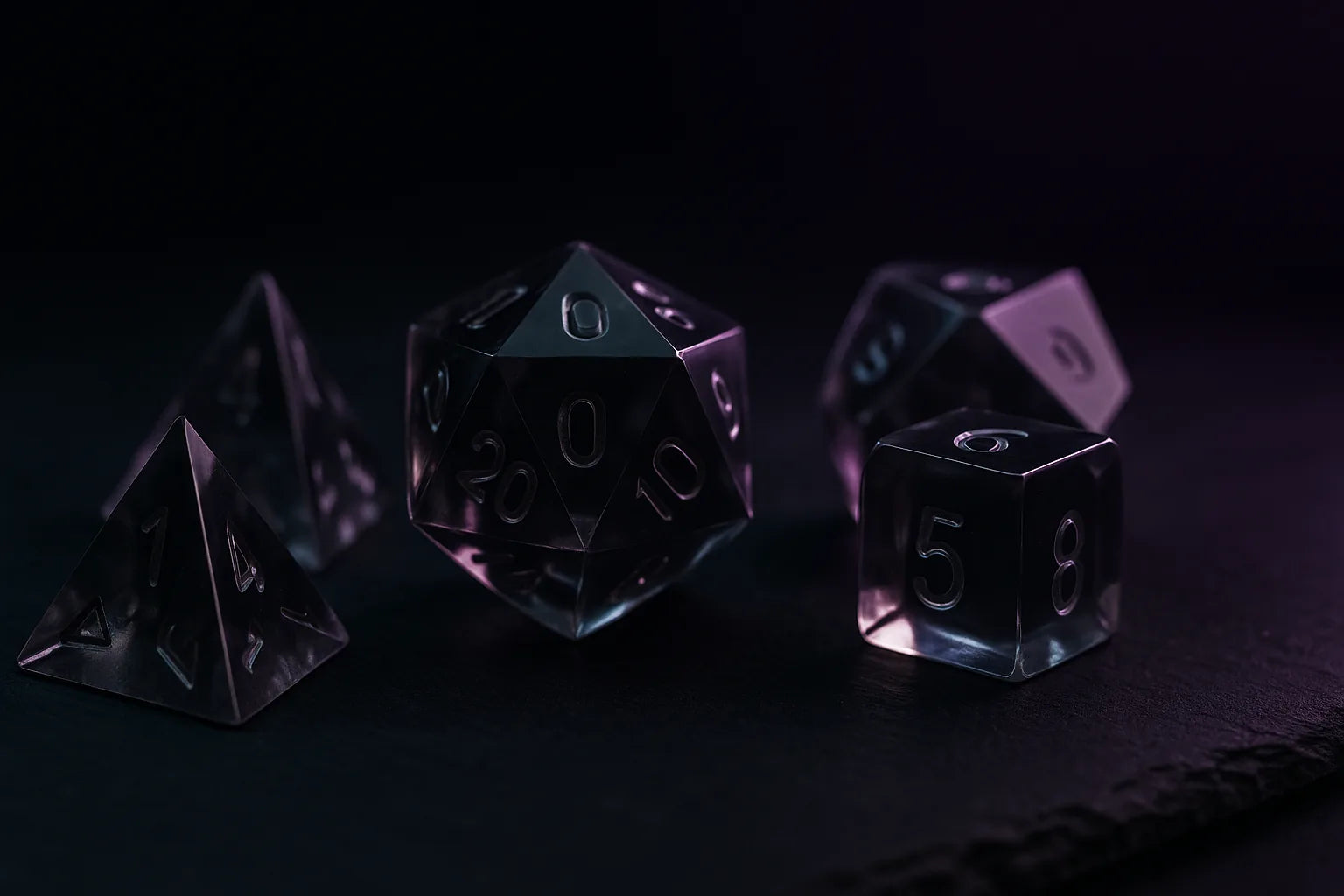
If you have spent any time browsing premium tabletop gear, you have almost certainly run into sharp edge dice and wondered whether the higher price tag and the striking looks actually translate into a better roll. Sharp edge dice sit at the top of the hobby for a reason, but they are not automatically the right choice for every player. In this guide we break down exactly what sharp edge dice are, how they differ from standard tumbled dice, whether they roll more fairly, how they hold up over time, and who should genuinely consider making the switch. By the end you will know whether sharp edge dice are worth it for the way you actually play.
What Are Sharp Edge Dice?
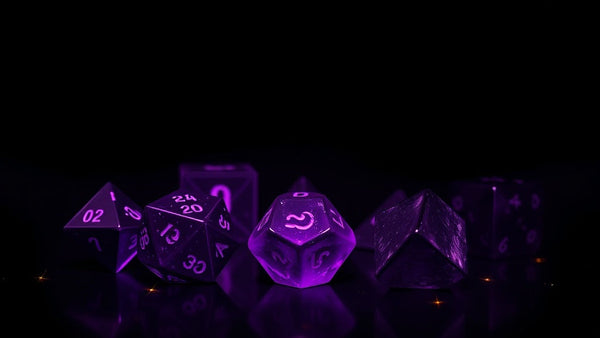
Sharp edge dice are precision cast dice, almost always poured in a hard resin, that keep crisp, clean corners and flat, well defined faces. The name says it all. Instead of the softened, rounded corners you find on most gaming dice, sharp edge dice have edges that meet at nearly perfect angles, giving each die a faceted, gem like appearance. Manufacturers typically pour the resin into a rigid mold, cure it, and then hand finish the surface so the numbers sit clean and the faces stay true.
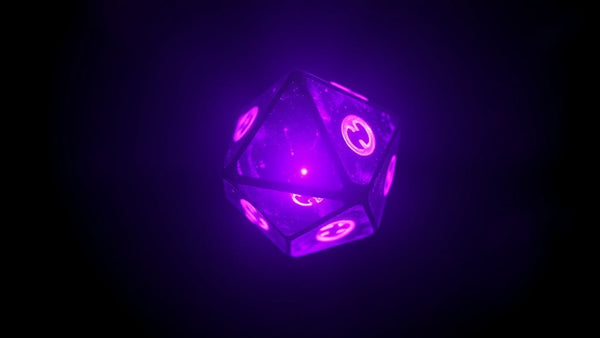
This production method is slower and far more labor intensive than mass producing standard dice. Each set often gets inspected, sanded, and polished by hand, which is a big part of why sharp edge dice command a premium. The payoff is a die that looks like cut glass or a carved jewel, with inclusions, glitter, layered colors, and painted numbers that show off the flat faces beautifully.
How Sharp Edge Dice Differ From Standard Tumbled Dice

Standard gaming dice are usually mass injected or cast and then tumbled. Tumbling is a process where the dice are placed in a rotating drum with an abrasive media that smooths away the seam lines left by the mold. It is fast, cheap, and reliable, which is why the vast majority of dice you buy in a starter set are tumbled. The tradeoff is that tumbling rounds off the corners and slightly softens the faces.
Sharp edge dice skip the aggressive tumbling step. The seams are removed carefully by hand or with light finishing so the geometry stays intact. Here is a quick comparison of the two styles:
- Corners: Sharp edge dice keep crisp, angular corners, while standard dice have rounded, softened corners from tumbling.
- Faces: Sharp edge dice have flatter, cleaner faces that show off inclusions and layered resin, while tumbled dice can look slightly cloudy or scuffed.
- Finish: Sharp edge dice are usually hand polished to a high shine, while standard dice have a more uniform machine finish.
- Price: Sharp edge dice cost significantly more per set because of the manual labor involved.
- Durability: Standard dice shrug off drops and hard rolls, while sharp edge dice are more prone to chipping.
In short, the difference comes down to geometry and finish. Sharp edge dice preserve the true shape of the platonic solid, which is exactly what makes them so visually appealing and, some argue, more balanced.
Are Sharp Edge Dice More Balanced and Fair?
This is the question that sparks the most debate, so let us be precise. A die is considered fair when every face has an equal chance of landing up. Balance depends on even weight distribution and consistent geometry. In theory, sharp edge dice have an advantage here because their faces and edges are truer to the ideal shape. Rounded corners on a tumbled die can, in rare cases, introduce a very slight bias because the die can roll a little more easily onto certain faces.
In practice, the fairness gap between a well made tumbled die and a well made sharp edge die is small for casual play. Both will feel random across the length of a normal game session. Where sharp edge dice can genuinely pull ahead is consistency of geometry. Because the corners are sharp and uniform, the die tends to tumble more times before settling, which produces a more chaotic, less predictable roll. Many players report that sharp edge dice feel like they mix up the outcome more, and there is real logic to that.
That said, resin casting is not immune to imbalance. Glitter, large inclusions, or an off center air bubble can shift the internal weight of any resin die, sharp edge or not. If perfect fairness is your absolute priority, precision machined casino grade dice are the gold standard, but those sacrifice the artistry entirely. For hobby play, sharp edge dice are at least as fair as standard dice and often a touch more consistent.
Aesthetics and Readability

There is no contest on looks. Sharp edge dice are the showpieces of the hobby. The flat faces act like little windows into the resin, so swirls, galaxies, florals, and metallic flakes are far more visible than on a rounded die. If you love collecting dice as much as rolling them, this is where the money goes.
Readability is a mixed bag and worth thinking about honestly. The large, flat faces of sharp edge dice give the numbers plenty of room, which can make them easy to read at a glance. However, some sharp edge sets use dark resins with subtle inking, and the deep, glossy surfaces can catch glare under bright lighting. Standard dice with high contrast numbers are sometimes easier to read quickly across a busy table. Before buying, look for strong contrast between the number ink and the body color if fast reading matters to you.
Durability, Fragility, and Care
Here is the honest downside. Sharp edge dice are more fragile than standard dice, and that is a direct consequence of what makes them beautiful. Those crisp corners are the first thing to suffer when a die takes a hard fall onto a table or the floor. A chipped corner on a sharp edge die is very visible and effectively permanent, whereas a tumbled die with rounded corners can take the same knock and show almost nothing.
Resin is also softer than the plastics used in many mass produced dice, so sharp edge dice can pick up scratches and dings over time. This does not mean they are delicate to the point of being unusable. It means you should treat them with a bit of care. Here is how to keep a set looking pristine:
- Roll on a soft surface such as a dice tray, a felt mat, or a folded cloth rather than bare wood or stone.
- Avoid dropping them from height or throwing them hard against a wall or barrier.
- Store them in a padded box, a foam tray, or individual pouches so they do not knock against each other.
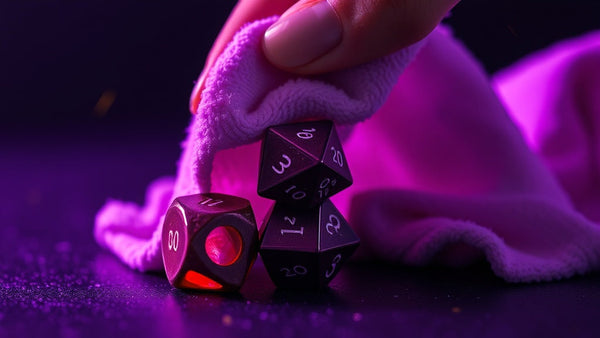
- Clean them gently with a soft, slightly damp cloth and avoid harsh chemicals that can dull the polish.
- Keep them out of direct sunlight and heat, since prolonged exposure can slowly yellow or warp some resins.
Follow those steps and a good set of sharp edge dice will stay sharp and glossy for years.
Price and Value

Sharp edge dice cost more, sometimes a lot more, than standard dice. A basic tumbled set can be very affordable, while a handmade sharp edge set often costs several times as much, and artisan or limited run sets can climb higher still. The extra cost pays for the mold quality, the resin, the hand finishing, and the labor of inspecting and polishing each die.
Whether that is good value depends entirely on what you want from your dice. If you view dice as disposable tools, the premium is hard to justify. If you view them as a piece of your character, a collectible, or a small work of art you use every session, the value proposition changes completely. Many players happily own one or two treasured sharp edge sets alongside a pile of cheap standard dice for chucking around. That hybrid approach is often the smartest use of money.
Who Should Buy Sharp Edge Dice?
Sharp edge dice make the most sense for a specific type of player. You are a strong candidate if you fall into one of these groups:
- Collectors who love the artistry and want display worthy sets that show off the resin.
- Long term campaign players who want a signature set tied to a beloved character.
- Gift buyers looking for something memorable and premium for a dedicated tabletop friend.
- Players who value roll consistency and appreciate the sharper, more chaotic tumble.
On the other hand, you can happily skip them if you play in rowdy sessions where dice fly, if you frequently lend or lose dice, or if you simply want reliable, cheap tools that you never have to baby. There is no shame in preferring standard dice. Plenty of veteran players roll tumbled sets for decades and never feel they are missing out.
How to Choose the Right Set
If you decide sharp edge dice are worth it for you, choosing well makes all the difference. Start by prioritizing readability. Pick a color scheme where the numbers pop against the body, especially if you play in dim rooms. Next, consider the inclusions. Heavy glitter and large embedded objects look stunning but can slightly affect balance, so if fairness is a concern, lean toward cleaner resins or simple layered colors.
Check the finish quality in photos and reviews. Look for clean, unbroken edges, evenly inked numbers, and a smooth polish without visible bubbles on the faces. A reputable maker will show close up shots. Finally, think about the full set. A standard polyhedral set includes the seven common dice, but some makers sell singles or larger sets, so make sure you are getting the dice you actually need for your game.
Do You Need a Dice Tray?
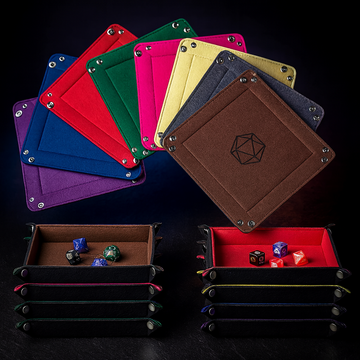
If you invest in sharp edge dice, a dice tray moves from nice to have to strongly recommended. The single biggest threat to these dice is a hard surface, and a tray solves that instantly. A tray with a soft felt or leather bottom cushions every roll, protects the crisp corners from chipping, keeps the dice from rolling off the table, and even quiets the noise. Think of it as insurance for your investment.
A tray is far less critical for cheap tumbled dice, which is another reason the two categories are so different. When you spend real money on sharp edge dice, spending a little more on a proper rolling surface is one of the smartest decisions you can make. It directly extends the life and the looks of your set.
Final Verdict: Are Sharp Edge Dice Worth It?
So are sharp edge dice worth it versus standard dice? For the right player, absolutely. Sharp edge dice deliver unmatched beauty, flat faces that showcase gorgeous resin, and a rolling feel that many players find more consistent and satisfying. They are the clear winner on aesthetics and a slight winner on geometric consistency. The tradeoffs are real though. They cost more, they chip more easily, and they ask for a bit of care and ideally a dice tray to stay pristine.
The honest answer is that sharp edge dice are a premium indulgence rather than a necessity. If dice are a meaningful part of your hobby and you are happy to treat a special set with respect, the upgrade is genuinely rewarding and you will feel the difference every time you roll. If you just need reliable numbers and want to spend as little as possible, standard tumbled dice will serve you faithfully for years. Match the dice to how you actually play, and you will never regret the choice.