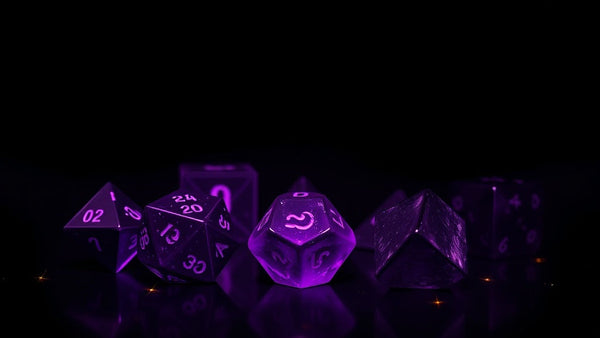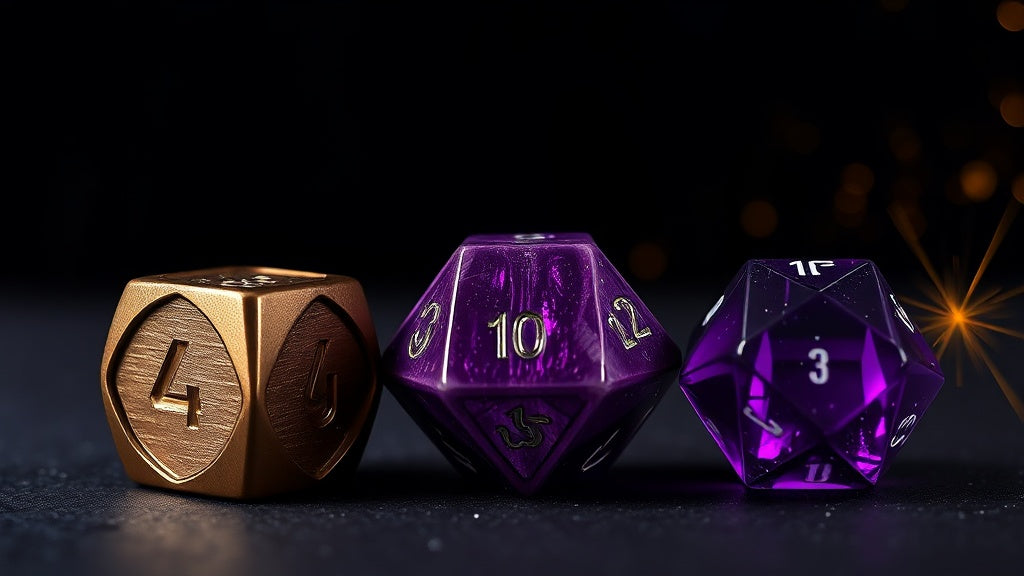
Metal, resin and gemstone are the three materials that dominate the modern dice world, and they could not feel more different at the table. One is heavy and loud, one is light and endlessly colourful, and one is a natural, one-of-a-kind luxury. If you are deciding which to buy, this honest comparison will save you from buyer's remorse, and help you spend your money where it actually matters for you.
How each material is made
Understanding how dice are made explains why they feel and cost so differently. Resin dice are cast: liquid resin is poured into precise moulds, often by hand, then pressure-cured to force out air bubbles before the numbers are painted and inked. Metal dice are typically die-cast from zinc alloy, then plated, polished and engraved, a more involved, more expensive process that yields a heavy, durable die. Gemstone dice are the most labour-intensive of all: blocks of natural stone are cut, faceted and polished by hand, with numbers engraved into the surface. Because stone is natural, every set varies, and offcuts are unavoidable, which is why gemstone sits at the top of the price ladder.
Resin dice: the versatile all-rounder

Resin dice are where most players start, and where many happily stay. Modern sharp-edge resin is hand-poured and pressure-cured, giving you crisp facets, deep colour and clean, readable numbers. Because resin can be tinted, layered and filled with glitter, swirls, foil or even tiny inclusions, the range of looks is effectively infinite, from subtle stone-like blends to glow-in-the-dark and liquid-core sets.
Pros: light and quiet on the table, the widest colour range by far, affordable, and great readability with deep-inked numbers. Cons: not indestructible, sharp-edge resin can chip if you hurl it onto stone, and very translucent colours can be harder to read in low light.
Best for: beginners, collectors who love variety, and anyone who wants the best balance of looks, price and everyday usability.
Metal dice: heft, drama and durability
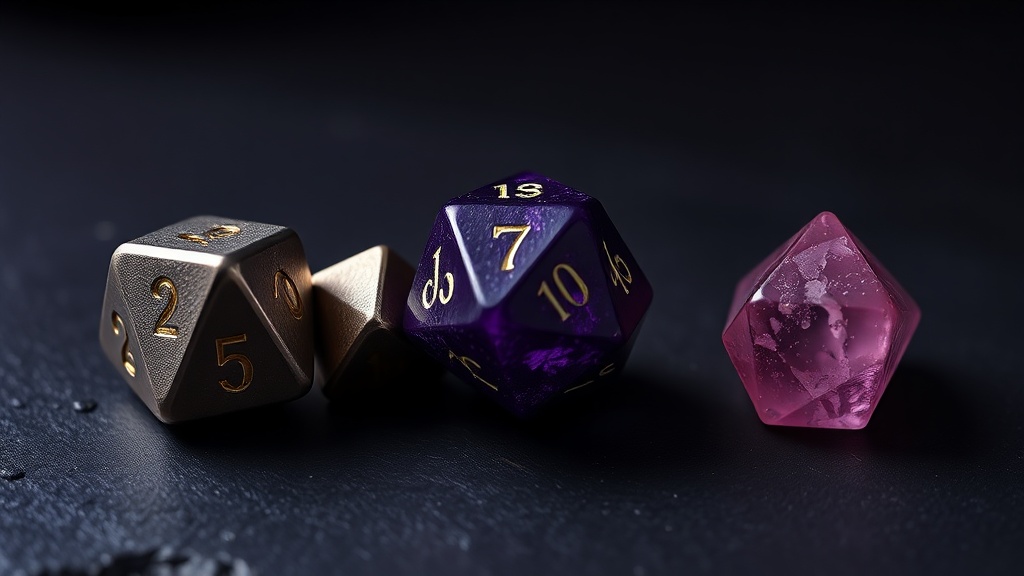
Metal dice are an experience. They land with a weight and a clack that plastic and resin simply cannot match, and that heft makes every critical hit feel earned. Cast from zinc alloy and finished with razor-sharp, deep-inked engraving, a good metal set looks and feels genuinely premium, the kind of thing you hand across the table and watch people's eyes widen.
Pros: near-indestructible, premium feel, sharp engraving, and a real statement piece. Most quality metal dice (including ours) carry a lifetime warranty against manufacturing defects. Cons: heavy (you will want a tray or tower so they do not chip your table, your dice tower or each other), louder, and more expensive per set.
Best for: players who want a statement or "forever" set, gift-buyers, and anyone who has ever cracked a cheap die in half.
Gemstone dice: natural and one-of-a-kind

Gemstone dice are the luxury end of the hobby. Each set is hand-cut from natural stone, polished to a premium finish, and utterly unique, the grain, colour and inclusions of every set are slightly different because nature made them, not a mould. Picking up a cool, heavy gemstone D20 feels special in a way that is hard to describe until you have done it.
Pros: truly unique, luxurious cool-to-the-touch feel, stunning centrepiece and an unforgettable gift. Cons: the most expensive option, natural stone can chip if dropped on a hard surface, and slight variation (and the odd natural inclusion or vein) is part of the deal, not a defect.
Best for: collectors, milestone gifts, and players who want something no one else at the table will have.
Side by side: weight, sound, price and durability
Here is the quick mental model:
- Weight: Metal > Gemstone > Resin.
- Sound: Metal is loud, gemstone is a solid click, resin is quiet.
- Colour range: Resin wins by a mile; metal and gemstone are more limited but premium.
- Durability: Metal is the toughest; resin and gemstone can chip on hard surfaces (use a tray).
- Price: Resin is the most accessible; gemstone is the most premium; metal sits in between but trends premium.
- Readability: All three read well when deep-inked; avoid very translucent resin for night games.
Which is best for travel and conventions?

If you game on the move, resin is the obvious winner, it is light, quiet (no one loves a loud table at 2am in a convention hall) and you will not cry if one goes missing in a hotel carpet. Metal is fantastic at home but heavy to carry in bulk and loud in shared spaces. Gemstone is best kept safe at home or used as a treasured single set rather than tossed in a bag with everything else. Whatever you carry, a padded dice bag keeps edges from scuffing in transit.
Mixing materials in one collection
You do not have to choose just one. Many seasoned players build a collection that mixes all three: a resin daily-driver for everyday sessions, a heavyweight metal set for big moments and boss fights, and a gemstone showpiece for that one special character or display shelf. Mixing materials keeps things interesting and means you always have the right set for the mood, plus it is a great excuse to keep collecting. If you are buying several at once, our bundles give you the third set free when you buy two.
Protect your investment
Whichever material you choose, a soft rolling tray or dice tower dramatically extends the life of your set, especially for metal (which can dent furniture) and gemstone (which can chip). It also keeps your rolls on the table and out of the snack bowl, and guarantees a fair, random result every time. For full guidance, see our guide on how to care for your dice.
Sound, weight and the feel of the roll
One thing photos never capture is how different each material feels to roll, and for many players that sensory experience is half the appeal. Metal dice have a satisfying, weighty tumble and land with an authoritative clack that makes a critical hit feel like an event, some players say they will never go back. Resin is lighter and quieter, with a softer, faster roll that suits long sessions and shared spaces where a loud table would annoy people. Gemstone sits in between, a solid, cool, premium click that feels expensive because it is. None of this affects fairness, but it absolutely affects enjoyment, and it is worth thinking about how you like a die to feel in your hand and sound on the table. If possible, handling a set before you buy (or reading detailed descriptions and reviews) helps you picture the experience, because the right "feel" is deeply personal and turns an ordinary roll into a small ritual you look forward to.
Common myths about dice materials
A few persistent myths are worth clearing up. The first is that heavier dice are luckier or more accurate, they are not; fairness comes from even, balanced construction, not from weight, and a well-made resin die is every bit as fair as a metal one. The second is that metal dice damage tables and resin dice are fragile toys, the reality is more nuanced: metal can dent soft furniture if you roll hard on a bare surface, while modern sharp-edge resin is tougher than people expect and only really suffers when thrown onto stone. The third myth is that gemstone dice are too delicate to use, in truth they are perfectly playable for years, you simply roll them on a tray rather than bare wood. Understanding what each material actually needs takes the worry out of buying any of them.
Caring for each material in one minute
Maintenance differs slightly by material, and knowing this before you buy helps you choose. Resin wants a soft dry cloth and a spot out of direct sunlight (UV can fade bright colours over time). Metal wants to stay dry, moisture is its only real enemy, and a quick buff keeps the engraving sharp. Gemstone wants a dry cloth, a soft rolling surface, and to be stored padded and apart from harder dice. None of this is demanding, but if low maintenance is a priority, resin edges ahead; if durability against drops and knocks matters most, metal wins. Our full dice care guide covers each in detail.
Frequently asked questions
Are metal dice unfair because they are heavy? No, weight does not bias a well-made die. Balance comes from even construction, which quality metal sets have.
Do gemstone dice chip easily? They can if dropped on a hard surface, because they are natural stone. Roll them in a tower or on a soft tray and they will last for years.
Is resin durable enough for regular play? Absolutely. Sharp-edge resin holds up to normal table use for years; just avoid hurling it onto stone or concrete.
Which material is best value? Resin, by a wide margin, it offers the most looks and usability per dollar, which is why it is the top beginner pick.
The verdict
If you are a new player or on a budget, buy resin, it is the smart, versatile choice. If you want a premium statement set or a gift that lands with a thud of quality, buy metal. If you are a collector chasing something genuinely unique, buy gemstone. There is no wrong answer, only the set that fits how you play. Browse the full armoury and find yours. Gear up. Roll to win.