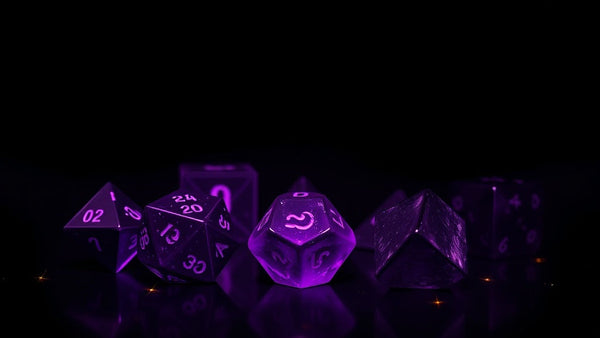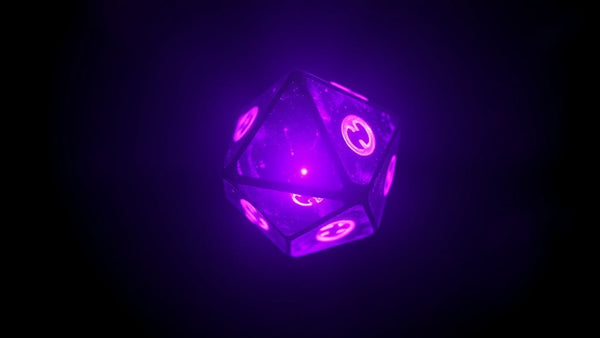
Few objects in the tabletop hobby capture attention quite like liquid core dice. Hold one up to the light, give it a gentle tilt, and you will see something magical happen inside the polyhedron: a shimmer of glitter drifting through a suspended bubble, or a tiny figurine bobbing and turning within a sealed pocket of clear fluid. These are not your standard opaque plastic dice. Liquid core dice are miniature kinetic sculptures, and they have become one of the most sought after treasures for collectors, dungeon masters, and players who want their gaming accessories to feel as special as the stories they help tell. In this guide we will break down exactly what liquid core dice are, how they are made by hand, whether they roll fairly, how to care for them, and what to look for when you decide to add a set to your collection.
What Are Liquid Core Dice?
At their heart, liquid core dice are polyhedral gaming dice that contain a small sealed chamber of liquid at their center. Inside that chamber floats something eye catching: fine cosmetic glitter, a swirl of pigment, a small metallic charm, or even a miniature sculpted figure such as a dragon, a skull, a heart, or a tiny sword. When you move the die, the trapped fluid allows the suspended element to drift, spin, and settle, creating a hypnotic snow globe effect on a scale small enough to fit in the palm of your hand.
The most common type is the d20, the twenty sided die that headlines nearly every roleplaying game session. Because the d20 is the largest die in a standard seven piece polyhedral set and has the most surface area, it gives artisans the room they need to build a visible, satisfying liquid core. That said, you can also find full sets where several dice share the same theme, and even single showpiece dice built purely to be admired. Liquid core dice sit at the intersection of function and art, and that dual nature is exactly what makes them so collectible.
How Liquid Core Dice Are Made

The magic behind liquid core dice comes down to patient, meticulous resin craft. Unlike mass produced injection molded plastic dice that pop out of a machine by the thousands, liquid core dice are almost always poured by hand in small studios. The process is part chemistry, part sculpture, and part sheer patience. Here is a simplified look at how a maker brings one to life:
- Preparing the mold. The artisan uses a precision silicone mold shaped like the target die, most often a sharp edged d20. The mold quality matters enormously, because any flaw in the cavity will show up as a blemish on the finished face.
- Building the core chamber. A small hollow void must be created at the exact center of the die. Makers do this by casting the die in stages, or by embedding a pre made sealed capsule that already holds the fluid and the floating element.
- Filling with liquid. The chosen fluid, often a clear mineral oil or a specialized inert liquid, is added along with the glitter, pigment, or tiny figurine. Getting the fill level right is critical so that a small movable bubble remains, which is what lets the contents float and travel.
- Sealing the core. The chamber is closed off and locked in place, then encased in additional clear resin so it becomes the permanent heart of the die.
- Curing. The resin is left to cure, sometimes under pressure to eliminate stray air bubbles. Pressure curing is one of the secrets to a crystal clear result, because trapped air scatters light and clouds the view of the core.
- Sanding and polishing. Once cured, every face is sanded through progressively finer grits and then polished to a glass like shine. This is the most labor intensive step and often takes longer than the pour itself.
- Inking the numbers. Finally, the recessed numbers are filled with paint or foil, wiped clean, and sealed so the digits read clearly against the transparent body.
Because so many of these steps rely on the human hand and eye, no two liquid core dice are ever perfectly identical. That is a feature, not a flaw. Every set carries tiny variations in how the glitter settles or how the figurine sits, giving each die its own personality.
Are Liquid Core Dice Balanced for Fair Rolls?
This is the question every serious player asks, and it deserves an honest answer. A perfectly balanced die has its mass distributed evenly so that no single face is favored. Because liquid core dice contain a moving fluid and a floating object, their internal mass is not static, which naturally raises eyebrows about fairness.
In practice, well made liquid core dice can roll surprisingly fair for casual and narrative play. The liquid is contained in a small central chamber, and because the fluid can shift freely, it does not lock the weight to one side the way a solid off center inclusion would. A tumbling die spins many times before it comes to rest, and a fluid core tends to average out rather than consistently pull one number down. For the vast majority of home games, one shots, and collection display, the fairness is more than good enough.
That said, if you play in a strict tournament or a competitive setting where certified balanced dice are required, a handcrafted liquid core die is probably not the right tool for the job. Think of these dice the way you would think of a beautiful mechanical watch versus a lab instrument. Both tell time, but you choose each for a different purpose. Use your liquid core dice for the moments where wonder matters most, and keep a set of simple precision dice on hand for anything that demands audited fairness.
How to Care for Liquid Core Dice

Because liquid core dice are resin based and hold a delicate internal chamber, they reward a little gentle care. Treat them well and a good set will stay clear and vibrant for years. Here are the habits that keep them looking their best:
- Keep them out of direct sunlight. Prolonged sun exposure can yellow clear resin over time and may fade the pigments inside the core. Store them in a box, tray, or display case away from a sunny window.
- Avoid extreme heat. Never leave liquid core dice in a hot car or near a heater. Heat can soften resin, expand the trapped fluid, and stress the sealed chamber.
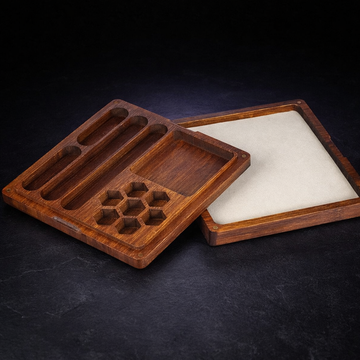
- Roll on a soft surface. A dedicated dice tray, a felt mat, or a mouse pad protects both the polished faces and your table. Hard repeated impacts can dull the shine and, over many years, weaken the resin.
- Clean gently. Wipe them with a soft, slightly damp cloth. Skip harsh solvents, alcohol, and abrasive cleaners, since these can etch or cloud the polished surface.
- Store them separately. Metal dice, keys, and coins can scratch resin. Give your liquid core dice their own padded slot so they do not rub against harder objects.
None of this is complicated. A few minutes of thoughtful storage protects an investment that took an artisan many hours to create.
Understanding Leaks, Bubbles, and Common Concerns
Whenever fluid lives inside a solid object, two questions come up: will it leak, and are those bubbles a problem? Let us look at both.
Leaks are rare in a properly made die, because the core is fully encased in cured resin with no open path to the surface. A well sealed chamber should stay sealed for the life of the die. Leaks usually only appear when a die is dropped hard onto a stone floor, exposed to extreme heat, or manufactured with a rushed seal. Buying from a maker who pressure cures and quality checks each piece is the single best way to avoid trouble.
Bubbles, on the other hand, are usually intentional and even desirable. A small air bubble is what allows the glitter or figurine to move; without it, the core would be a static block. The bubble acts like the empty space in a spirit level, giving the contents room to travel as you tilt the die. So if you see a little moving bubble, that is by design. The bubbles you do not want are the tiny cloudy micro bubbles trapped in the surrounding resin, which come from a pour that was not degassed or pressure cured. Those affect clarity but not function, and a skilled maker keeps them to a minimum.
Liquid Core Dice Prices and What Drives Cost

Liquid core dice command higher prices than ordinary plastic dice, and once you understand the labor involved, the reasons become clear. A single die can take hours of hands on work spread across several days of curing. You are paying for craftsmanship, time, materials, and the maker experience needed to get a flawless clear result.
Several factors push the price up or down:
- Single die versus full set. A standalone liquid core d20 is the most common offering. Matching full polyhedral sets with liquid cores in every die cost considerably more because each piece multiplies the labor.
- Complexity of the core. A simple glitter swirl is easier to execute than a hand placed figurine that must float upright and centered. More intricate cores raise the price.
- Clarity and finish. Perfectly clear, mirror polished dice take more sanding and pressure curing than a lightly frosted style.
- Maker reputation. Established artisans with proven consistency often charge a premium, and it is frequently worth it for reliability.
As a rough guide, expect a quality single liquid core d20 to cost meaningfully more than a whole set of standard dice, and treat that price as the entry ticket to a genuine piece of functional art rather than a disposable game accessory.
How to Choose the Right Liquid Core Dice
With so many styles available, picking your first set can feel overwhelming. Focus on a few practical questions and the choice gets easier. First, decide whether you want a single showpiece d20 or a coordinated set for actual play. If you mostly want the wow factor, a single die delivers maximum impact for less money. If you want to run a full campaign with a matching aesthetic, invest in a set.
Next, think about the core itself. Glitter cores catch light beautifully and pair well with almost any color scheme, while figurine cores tell a story and suit players who love a specific theme such as dragons or the arcane. Consider readability too: a busy, heavily pigmented core can make numbers harder to read across a lit table, so if in game legibility matters, lean toward a cleaner core with strong inked digits and good contrast.
Finally, buy from a seller who shows real photos and, ideally, video of the die in motion. Because liquid core dice are handmade, seeing the actual movement of the core tells you far more than a stock image ever could. Read what buyers say about clarity, seal quality, and whether the numbers are easy to read. A trustworthy maker will happily show the die from every angle.
Why Liquid Core Dice Are So Collectible
Beyond function, liquid core dice have earned a devoted following for reasons that go deeper than fair rolls. They are conversation starters. Set one down at the table and everyone leans in to watch the glitter drift. For dungeon masters, a striking d20 becomes part of the theater, a physical prop that heightens the drama of a critical roll. For collectors, the handmade nature means scarcity: small studios produce limited runs, colorways sell out, and no two dice are ever exactly alike.
There is also an emotional pull. A liquid core die feels like it holds a tiny world inside it, a captured moment of motion frozen in resin yet still alive when you touch it. That blend of artistry, rarity, and interactivity is why so many players who start with one liquid core die quickly find themselves building an entire display of them.
Final Thoughts
Liquid core dice are where craftsmanship meets play. They are handmade resin creations with a floating core of glitter or a tiny figure suspended in fluid, poured, cured, sanded, and polished one piece at a time. They roll fairly enough for the games most of us play, they reward gentle care, and their higher price simply reflects the many hours of skilled work poured into each one. Whether you are a dungeon master hunting for the perfect dramatic d20, a collector chasing rare colorways, or a player who just wants a die that sparks joy every time you pick it up, liquid core dice deliver a kind of wonder that ordinary dice never will. Choose a well made set, treat it kindly, and it will roll alongside your adventures for years to come.