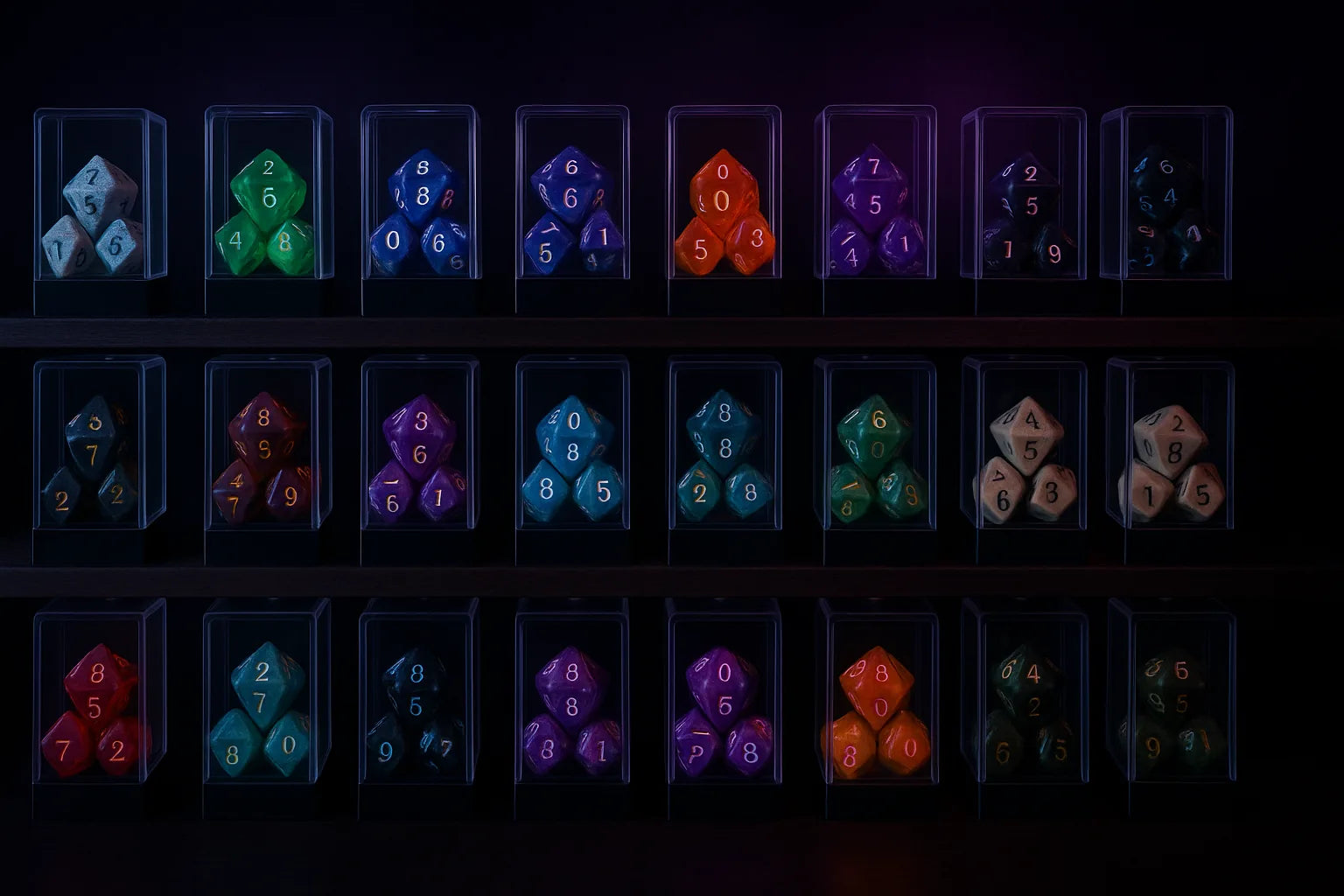
Welcome to the wonderful world of dice collecting, where a single roll can spark a lifelong passion. Whether you play tabletop roleplaying games, love board games, or simply admire the craftsmanship of a beautifully cast polyhedral set, dice collecting is a hobby that rewards curiosity and patience. This guide walks you through everything a beginner needs to know: the types of dice worth collecting, how to set a realistic budget, where to buy, how to store and display your treasures, and how to sidestep the most common pitfalls. By the end, you will feel confident enough to build a collection you are proud to show off.
People come to dice collecting from many directions. Some start with a single set that shipped alongside their first roleplaying rulebook and never looked back. Others fall in love with the way light passes through a resin die or the satisfying weight of a metal one landing on the table. Whatever draws you in, the hobby is welcoming, affordable at entry level, and endlessly deep once you dive in.
Why Dice Collecting Is So Addictive
The appeal of dice collecting comes down to variety and craftsmanship. No two handmade sets are exactly alike, and modern makers pour real artistry into every pour, cut, and polish. A collection becomes a personal gallery of tiny sculptures, each one carrying a story about where you found it, why you chose it, and the games it has played a part in. Add to that the thrill of the hunt, the joy of a limited release, and the pride of a full display shelf, and you have a hobby that keeps giving.
There is also a practical side. Dice are functional art. Unlike many collectibles that sit sealed in boxes, your sets can actually be used at the table, which means your collection stays alive and connected to the games you love. That dual nature, both display piece and playable tool, is a big part of what makes the hobby so rewarding.
Types of Dice Every Collector Should Know

One of the first things new hobbyists discover is just how many kinds of dice exist. Understanding the main categories helps you decide what excites you and where to spend your money. Here are the styles that define modern dice collecting:
- Resin dice: The most common collectible sets. Resin allows makers to embed glitter, flowers, tiny figures, and swirling colors. They are lightweight, affordable, and come in an almost infinite range of designs.
- Metal dice: Cast from zinc alloy or other metals, these sets have a satisfying heft and a premium clink. They often feature plated finishes like antique copper, gunmetal, or gold, and they age beautifully with use.
- Gemstone dice: Carved from real stone such as amethyst, tiger eye, or obsidian, gemstone sets are prized for their natural patterns. Each set is unique because the stone itself is unique.
- Liquid core dice: These feature a sealed chamber filled with fluid, glitter, or a floating charm that shifts as the die moves. They are eye catching and a favorite for display.
- Sharp edge dice: Made from clear or translucent resin with crisp, unrounded corners, sharp edge sets look like cut glass. They magnify the inclusions inside and are among the most photogenic dice you can own.
You do not need one of everything to start. Many collectors specialize, focusing on a single material or color family, while others chase variety. There is no wrong approach, only the one that brings you the most joy.
Setting a Budget for Your Collection
Dice collecting can be as gentle or as ambitious on your wallet as you want it to be. A basic acrylic set can cost just a few dollars, while a hand poured sharp edge set from a boutique maker might run into the tens or even hundreds. The key is to set a monthly spending limit before you start browsing, because the temptation to add just one more set is very real.
A smart approach for beginners is to allocate a modest amount each month and rotate what you buy. One month you might invest in a single premium metal set, and the next you might grab three fun resin sets. This keeps your collection growing steadily without straining your finances. Track your purchases in a simple spreadsheet so you always know what you own and what you have spent. Over time this record becomes a valuable inventory, especially as your collection expands beyond what you can easily remember.
Where to Buy Dice for Your Collection

Knowing where to shop is half the battle in dice collecting. Independent makers sell directly through their own online stores and social media shops, and buying from them supports the artists who keep the hobby thriving. Crowdfunding campaigns are another popular source, often offering exclusive designs that never reach general retail. Local game stores are worth visiting too, since handling dice in person helps you judge weight, balance, and finish before you commit.
When buying from smaller makers, read reviews and check production timelines, as handmade sets sometimes ship weeks after ordering. For your first purchases, mass produced sets from established brands offer reliable quality at friendly prices, making them a perfect testing ground while you figure out your taste. Once you know what you love, you can branch into limited runs and artisan pieces with confidence.
How to Store and Display Your Dice
As your collection grows, storage becomes essential to keep everything organized and protected. Loose dice scattered in a drawer are easy to lose and prone to scratches, so a proper system pays off quickly. Here are the most popular options collectors rely on:
- Foam trays and cases: Trays with individual slots hold each set neatly in place and stack well for larger collections. Hard shell cases add protection for travel.
- Display shelves: Glass front cabinets and tiered risers turn your collection into a showpiece, letting light play across resin and gemstone sets.
- Dice boxes: Wooden or leather boxes with felt lining keep a single set safe and make a handsome gift or travel companion.
- Bags and pouches: Drawstring bags are perfect for grab and go gaming, though they offer less protection for premium sets.
- Photo albums and binders: Some collectors use padded binders with pockets to display sharp edge sets while keeping them dust free.
Whatever method you choose, keep your dice away from direct sunlight and extreme heat. Prolonged sun exposure can fade colors and, over years, cause certain materials to yellow or warp. A cool, shaded spot preserves the vivid look you fell in love with.
Caring For and Maintaining Your Dice

Good maintenance keeps a collection looking sharp for decades. Most resin and acrylic sets need nothing more than an occasional wipe with a soft, dry cloth to remove dust and fingerprints. If a set gets sticky or grimy, a barely damp cloth followed by immediate drying does the trick, but never soak dice in water or use harsh cleaners, since these can dull finishes and loosen inked numbers.
Metal dice deserve a little extra attention. Their plated coatings can wear at the corners over time, which some collectors actually enjoy as a sign of a well loved set. If you prefer to preserve the finish, store metal sets in separate compartments so they do not rub against one another. Gemstone dice are natural stone and can chip if dropped on hard surfaces, so roll them on a felt tray or dice mat to protect both the dice and your table. A quality rolling surface is one of the best small investments a collector can make.
Common Pitfalls to Avoid
Every hobby has traps for the unwary, and dice collecting is no exception. The most frequent mistake beginners make is buying impulsively without a plan, which leads to a jumble of sets that do not reflect any real preference. Take time early on to notice which colors and materials genuinely excite you, then let that guide your purchases. Your collection will feel far more cohesive and meaningful.
Another pitfall is ignoring balance and fairness, especially with cheap metal or novelty sets that can roll unevenly. If you plan to game with your dice, a quick float test in salt water can reveal a badly weighted die. Finally, avoid overspending during hype driven releases. Limited editions are exciting, but a set is only worth what it brings you personally, so buy because you love it, not simply because it might be rare. Patience almost always leads to a happier, higher quality collection.
Joining the Dice Collecting Community
Perhaps the best part of dice collecting is the community that surrounds it. Online forums, social media groups, and dedicated hobby servers are full of friendly enthusiasts who share photos, trade sets, and celebrate new arrivals. Getting involved teaches you about makers you might never have found alone, alerts you to upcoming releases, and connects you with people who understand the quiet thrill of a perfect roll.
Many collectors also enjoy photographing their sets and posting them, which sharpens your eye and documents your growing collection. Do not be shy about asking questions, because the community is famously welcoming to newcomers. Sharing your journey often turns a solitary hobby into a social one, and the friendships you build can last far longer than any single set.
Your Dice Collecting Journey Starts Now
Starting a dice collection is one of the most satisfying hobbies you can pick up, blending art, function, and community into something uniquely your own. Begin small, learn the different materials, set a budget you are comfortable with, and invest in storage that keeps your treasures safe. Care for your sets, avoid the common traps, and lean on the community whenever you want guidance or inspiration. Above all, remember that dice collecting is meant to be fun. Every set you add is a small celebration of craftsmanship and the games you love. So pick that first set that catches your eye, give it a roll, and enjoy the adventure ahead. Your collection, and countless memorable rolls, are waiting.